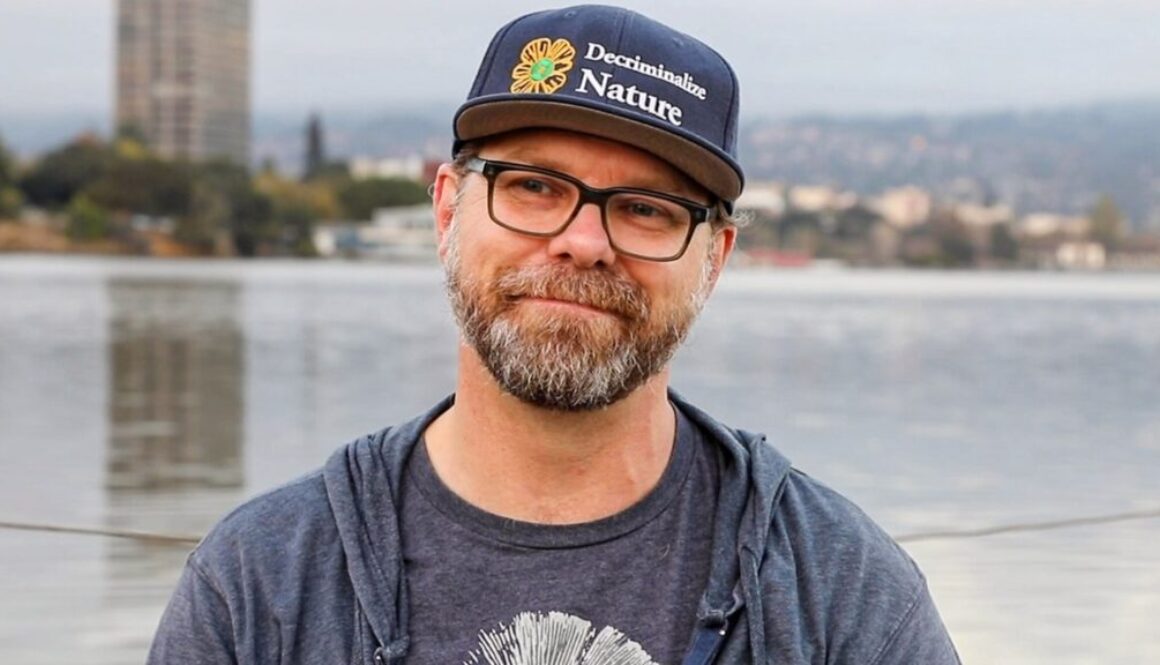
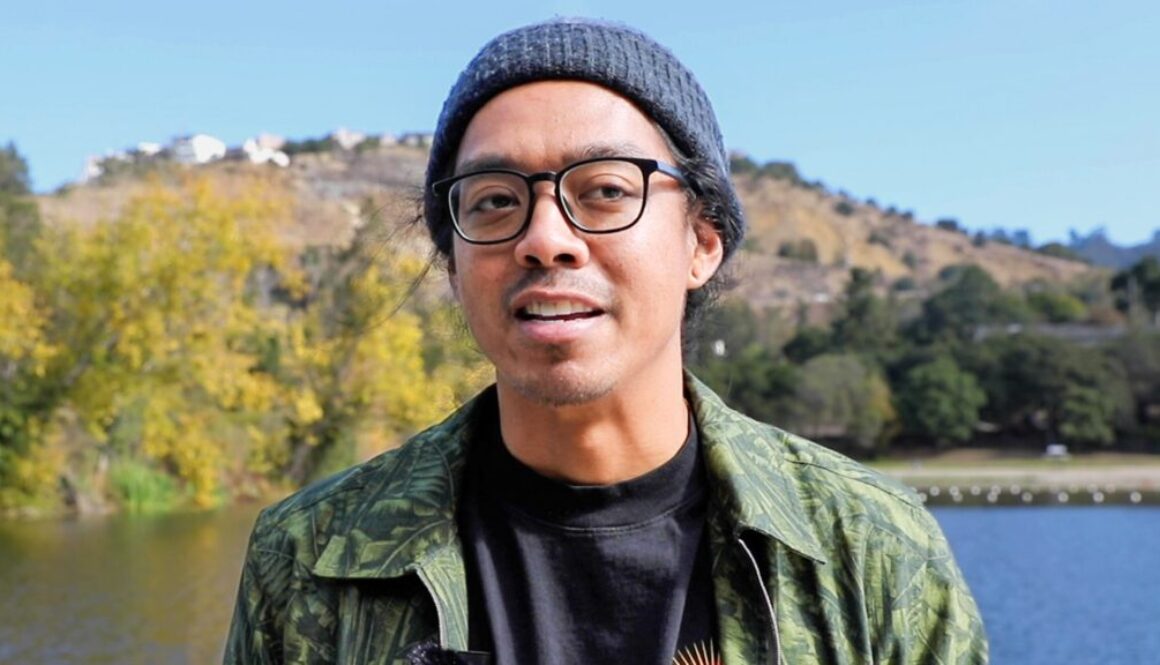
Larry Norris is the co-founder, national organizing director, and board member for Decriminalize Nature. He also has a nonprofit organization here in the San Francisco Bay Area called Entheogenic Research Integration & Education (ERIE). In this interview Larry dives deep in what it means to claim back agency over your consciousness.
Larry wrote his dissertation looking at Ayahuasca experiences and archetypes of transformations that truly impact an individual for not just months or years, but decades after.
https://www.youtube.com/watch?v=RNtAV8RAk0Q
Watch: Who Has Agency Over Our Consciousness Pt. 1
Watch: Who Has Agency Over Our Consciousness Pt. 2
https://vimeo.com/933844704/41d522fedb
Why should we focus on a relationship with Nature?
Larry When we began in December of 2018 to have this conversation, our conversation was around, okay, so there’s decriminalization of mushrooms happening in Denver, legalization of mushrooms happening in Oregon.
What can we do here in Oakland and so part of that conversation is saying, you know, hey, why are we doing just one substance, we have a lot of different communities in the San Francisco Bay area. There’s an ayahuasca community, there’s an Iboga community, there’s a DMT community, there’s mushroom community.
So why are we going to just limit to just one material?
So we said, let’s have a bigger conversation about nature. It’s not just about one particular plant or one particular mushroom, but our relationship with nature.
Who has agency over your consciousness?
What can we learn from nature? We are nature. Why are we criminalized?
And so these are the kind of conversations we wanted to have. And I think once we started having that conversation, it opened up a much broader understanding of policy.
So by having all the different plants and mushrooms together really allowed us to have this conversation about nature, which then goes into what are we doing to the environment?
What are we doing to ourselves?
What are the issues around homelessness?
What are the issues around economic reform?
What are the issues around people and their connection to each other?
And so by having this conversation about nature, we were able to have a much bigger one.
Make a Donation
Your donation will help us publish more personal stories involving psychedelics to transform public opinion, reduce stigmas, and redefine wellness. It can also help self lives.
Welcome to Normalize Psychedelics. We’re building a community that celebrates transformation through authentic medicine work. 🌱 While psychedelic healing is often associated with mental health, our community members are discovering breakthroughs across all aspects of life—from healing relationships to breaking free from addiction to finding authenticity at any age. Dive into our collection of transformation stories and discover how intentional psychedelic experiences are helping people become the best versions of themselves.
I literally watched my addiction exit my body. I came back, and I knew something was different.
Meet Sam Fullterton
Sam Fullerton, originally from Pittsburgh, shares his journey of recovering from a severe opiate addiction. Consuming up to 700 milligrams of oxycodone daily, Sam struggled immensely with withdrawals. At a crucial point, he decided to try DMT, an intense psychedelic substance. Through repeated use, he experienced profound, transformative revelations and visualizations that led to an unexpected and miraculous shift in his addiction. Despite subsequent physical injuries, which required temporary opiate use, Sam found himself free from addiction’s grip, attributing his recovery to his mystical DMT experiences.
Sam describes his withdrawals from Opiate Addiction
I ran out of pills at that festival. I took a small piece of Suboxone, drove home. And just knew that I couldn’t buy them anymore. Three days passed and I was going cold turkey. And cold turkey off of 700 milligrams of oxycodone is atrocious.
Pain, phantom pain, sleeplessness nausea, diarrhea, you name it. The sweats, everything that you could possibly imagine was going on. Everything in my body ached. Every cell in my body ached. I was about to lose my house. And I was falling off. There was no question. That was like the most stressful experience that I’ve ever had to go through.
And I’m going through withdrawals and there’s no question in my mind, I am going to fall off, ready to buy some pills.
Sam’s Experience with DMT during opiate addiction withdrawals
And the light just went off in my head. I said, grab that DMT. Something has to happen. I don’t know what it is, but something has to happen right now, or I’m in a bad place.
So I grabbed it and I started Just loading up the pipe, it was really magical the first time I hit it. It was this feeling It just started Overwhelming me and I had to take off my shoes because I needed to feel everything, you know so I went out onto the street and I could feel the concrete and then I walked into the mulch and I could into the grass and I could just feel Everything touching me and and just it was just this magical feeling that Couldn’t explain.
And, I did this for about two hours. DMT trips, for anyone who might not know, are probably, typically, seven to twelve minutes long. So I just continued and continued and for the most part it was colors, it was shapes and designs, and it was things that my mind and your mind, no one’s mind, can even begin to imagine until you’ve actually been through it.
Probably two hours in I looked up at the television and DJ Shadow, What Does Your Soul Look was on. And I said, you know what, that’s a very good question, and I packed it up and I hit it one more time. And this was the first time that I really felt anything close to a breakthrough, when I hit it, this voice came out of me, and it asked, in this sense, It was almost a demonic kind of a voice, something I can never mimic, but it just said, What does your soul look like, Samuel?
I remember finding myself head between my knees, squeezing, clenching my jaws, clenching my eyes, and there’s this, infinite mandala just swirling in every different direction and inside of all of the spaces you had buddhas and ganeshas probably other deities but those are the ones that i can remember and recognize at that point and i and i had no, at that point, real background in, in Hindu or Buddhism or anything
But there they were. And they were basically beckoning me, calling me, telling me come to us and be absolved of everything that’s inside you, let it go. And so I went towards them. And when I got to them, they showed me what my soul actually looked like, and my soul was black. It was tar. And We stayed there for what felt like an eternity.
And then all of a sudden, there was this eruption of color that just burst from the bottom of me and out the top of my head. And I literally watched my addiction exit my body. I came back, and I knew something was different.
I literally watched my addiction exit my body. I came back, and I knew something was different.
After that, I went through a withdrawal for four months. Two months after that, I was still going through the minor portions of it.
I never had another craving. Never.
From that time of watching my addiction leave my body, until those were gone, I’ve never had another craving.
Make a Donation
Your donation will help us publish more personal stories involving psychedelics to transform public opinion, reduce stigmas, and redefine wellness. It can also help self lives.
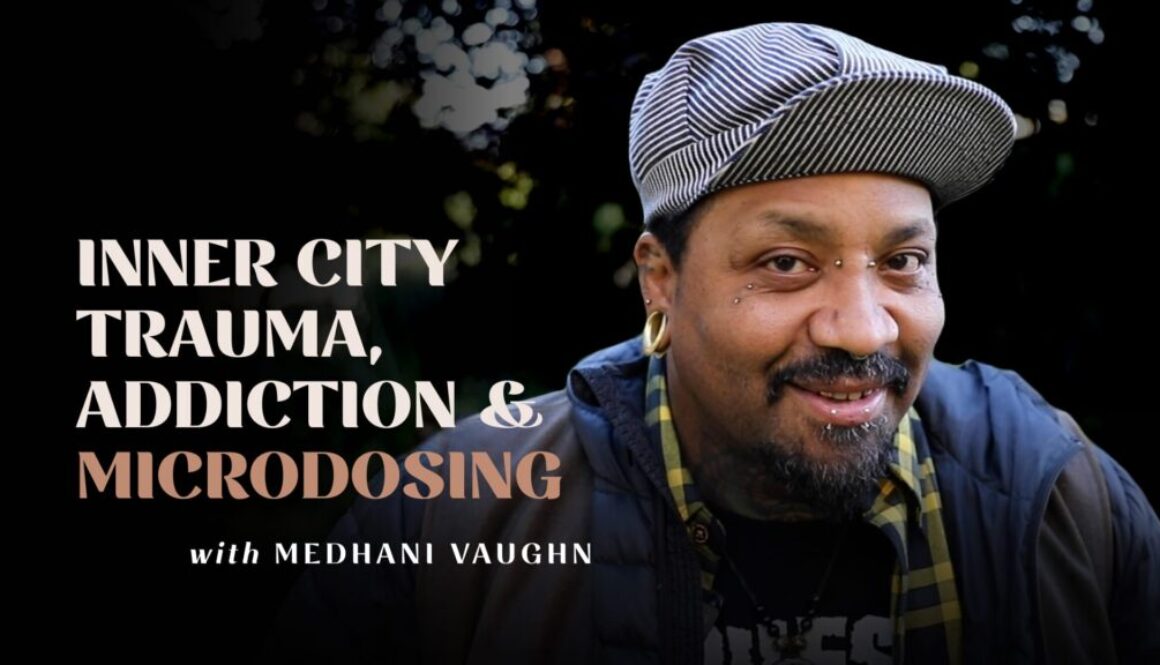
Medhani Vaughn is a social justice activist who works with “fringe folks” – this includes addicts, recovering alcoholics, and folks from trauma backgrounds. Medhani grew up in the inner city and became “cross addicted to many substances” before deciding to choose sobriety.
Meet Medhani Vaughn
Medhani Vaughn is a social justice activist who works with “fringe folks” – this includes addicts, recovering alcoholics, and folks from trauma backgrounds. Medhani grew up in the inner city and became “cross addicted to many substances” before deciding to choose sobriety. In our interview Medhani covers healing inner city trauma from the root cause, redefining addiction, and what type of role plant medicine has played in his life.
Watch “Healing Inner City Trauma – Plant medicine can help address core wounds”
https://www.youtube.com/watch?v=nFmP8vdwBYM
Can you talk about how plant medicine helped heal your addiction?
I’ve had such an experience with chemicals, both legal and illegal I was very cross addicted.
There was not a single drug that I considered my drug of choice and my dependency. It started out as recreational and experimental. I mixed all the substances and became a heavier use addict with the harder stuff.
Even after years of being sober there were still some issues that were deeper.
Even after tons of ceremonial journeys and spiritual journeys and real deep therapy, EMDR, hypnotherapy, I still couldn’t pull the veil off of those things and get a clear lens on, on how it was I wanted to choose my life path.
I work in the body modification industry. And so I feel very kind of attuned to a lot of ancient things. it became very clear to me that I needed some ancient medicine and some things that came from non traditional places.
When I first chose to administer plant medicine to myself, it came from a place of, of very high respect for their origin and their real purpose.
It was all from a healing element and it has all been on a micro, not a macro scale.
How does microdosing plant medicine help you with impulse control?
I’ve been a person that always thought spontaneity as a survival mechanism, being unpredictable, is kind of an asset. You can just move a little different.
As I grew as an addict impulse became a thing, just feeding that compulsion and just acting fast. I noticed my whole life, just because of my own disorders and trauma and the way ‘m built that I’ve always kind of been out of step with things.
To sync up for me took some, some slowing down at some times and speeding up at other times.
And so to create a different pace, I think microdosing has definitely given me the ability to know when impulses are irregular.
I think impulse is good in certain situations. But sometimes that can be misfiring where a person is just impulsive all the time. And I kind of equate it to driving, right?
I’ve been in a car with someone that, that drives and they’re always on the gas, always on the gas, and they’re always moving. Proactive on pumping the brake, hitting the gas, pumping the brake.
And, you know, sometimes in driving, you’re not doing any of that. You’re not even really steering. You’re just kind of coasting, letting the car do the work and work under its own momentum. And so I’ve kind of learned to do that same thing with my impulses too.
Watch “Overcoming Addiction – Microdosing helps me with impulse control”
https://www.youtube.com/watch?v=LmgUmrNnnm0
How can plant medicine help us heal our communities?
I think the biggest obstacle that we have is all the stigma with how hallucinogenics can be healing and, and how there’s a lack of advocacy, information, education, and outreach in our society here in the United States.
I feel like because of, of the drug war and because of the economy here in the United States. And you know, even with the turn towards some areas with decrim and legalization you know, capitalism still has a huge role. It has the ability to take hold of it and still turn it into big pharma.
I actually was speaking with a friend from Brazil last night and on a recent trip, she was like, I haven’t been back in five years and everyone there is doing mushrooms and I really actually enjoy going there now. All of my friends used to do cocaine and now it’s a totally different culture.
And she said, it’s very widespread there. Everywhere you go, everyone’s openly exchanging, gifting, ingesting together. And none of it is from a party vibe. It’s from a healing vibe. It’s from a community vibe.
Here in the United States, you know, it’s just hopeful that one day we can unify in in that realm and be able to do more outreach and see that the healing is there.
I feel like there’s just been so much harm done with the way our government has withheld plant medicine as a resource for the people. Plant medicine has always been helpful to indigenous cultures.
Ramzy Abueita is a leader in the psychedelic renaissance and community weaver. He was part of the decriminalization movement in Ann Arbor, Michigan and Colorado statewide and now he lives in Boulder, Colorado. In this interview Ramzy shares with us how he started a grassroots psychedelic movement in Boulder that changed policy!
Ramzy has a degree in neuroscience from the University of Michigan and has presented on the neuroscience and neurobiology of psychedelics to the Center for Consciousness Science at the University of Michigan Medical School, the Michigan Psychedelic Society, and to the public. Ramzy is the owner of Myco Cafe, a mushroom-themed coffeeshop and art cafe in Boulder.
How did you get started in the Decriminalization Movement?
Ramzy: My involvement in the decriminalization movement actually started in Ann Arbor, where I had studied neuroscience at the University of Michigan, and I was still living in Ann Arbor after I graduated.
There was a new movement that had emerged in Ann Arbor coming from the Michigan Psychedelic Society as a group called Decriminalize Nature, Ann Arbor and Decriminalize Nature Ann Arbor was following in the footsteps of Oakland, California, and Santa Cruz, California, which were the first two cities to implement a decriminalized portion of all the entheogenic plants and fungi.
How were you able to start a local psychedelic movement in Ann Arbor, Michigan?
In Ann Arbor, we were following a really simple strategy. We wanted to see what would happen if we got members of our community to basically tell their stories to members of City council, the local elected leaders.
And those stories are very simple and very personal. You know, people just went on the record and told what their experiences were like.
You know, they told stories of healing from postpartum depression.
They told stories of recovering from PTSD.
They told stories of rekindling relationships with family members that they’d lost touch with.
And these stories are very heartfelt.
It was as simple as getting people to record videos, video testimonies of their stories and just telling those stories, sending those videos to members of the city council.
It took a few weeks of directly speaking to City council before a member of the City Council introduced the resolution to the vote. We were a little bit taken aback by the speed and the rate at which Ann Arbor went ahead with decriminalization.
We thought they were just going to introduce the resolution and talk about it and then table it and bring it up at another meeting. And then, the next meeting, they were going to talk about it some more and then table it again and maybe, you know, three or four meetings later, they would finally be ready to bring it to a vote.
But to our surprise, the very day that they introduced the resolution to the Ann Arbor City Council, they put it to a vote.
And then all of a sudden, the Ann Arbor City Council voted to decriminalize 11 to 0. It was unanimous. It was a unanimous vote that completely caught us off guard. We weren’t expecting it to be unanimous.
We weren’t even expecting them to vote. But, you know, it’s a testament to the power of how our stories influence our local elected leaders.
How should community members record their personal testimonials to send to their City Council ?
Ramzy: We are very peculiar about having this be a true grassroots movement. And what that means is we let people show up and speak from their hearts.
We give some very rough guidelines such as be sure to start by introducing yourself and then make sure your statement is under 2 minutes and practice your statement.
But really, we just let them go up and on the podium and tell their stories straight from their hearts and we get testimonies from very different angles.
Some people approach it from their very personal experiences. Some people talk about it from the scientific side. They talk about all the scientific evidence and the research articles and the studies and other people talk about being therapists and in their therapy practice, seeing all the transformation in their clients. Other people talk about it from a cultural perspective. Other people talk about to the deep legacy of Indigenous practice.
In letting people show up and speak from their authentic voice, It allows us to get a constellation of perspectives of how people in the community engage and relate with these substances.
Can we trust our local elected officials?
Ramzy: You know, you can be cynical about what politicians can be like as you get higher up the rungs, higher up the echelons of the political sphere. I would say the higher up that ladder you go, the more influenced by money, the more pay to play politics becomes.
On the local level, that’s where you have the true grassroots voices. That’s where the local elected leaders, the members of the community that are your neighbors, they’re people who are walking their dogs in the morning and run into people in the community.
So when the community speaks, they listen. They tend to be compelled.
Make a Donation
Your donation will help us publish more personal stories involving psychedelics to transform public opinion, reduce stigmas, and redefine wellness. It can also help self lives.
Kevin is a licensed psychiatric technician for the state of California. In this interview we dive into what it would look like to introduce psychedelics to our prisons.
Meet Kevin-Rejuven8Collective
My name is Kevin. I’m a licensed psychiatric technician for the state of California. I’ve been serving the marginalized populations for the last 12 years through state hospitals, state prisons and treatment centers.
I’m the founder of Rejuvenate Collective, a platform to advocate for safe, effective, accessible and natural mental health support.
I hold space for people that are interested in exploring healing properties of plant medicine, and I’m interested in creating community healing modalities in institutions like prisons and giving access to parolees.
I’ve worked with all people from different walks of life, from celebrities to murderers to sex offenders. And, we all need to be mentally sound to progress.
Watch the Recap from our interview with Kevin:
https://www.youtube.com/watch?v=uqBLRyfGM4Q&t=6s
Watch the full interview with Kevin
https://vimeo.com/235215203
How are incarcerated people taken care of currently?
So they get there. It’s really easy to get something prescribed.
I feel like the doctors in the prison are not really equipped to deal with high emotions that they have no connection to. They probably just all learned how to deal with it in school. But they don’t really have that genuine experience to see what other people are going through, especially the prisoners.
It’s a lot of segregation, a lot of a lot of staff versus the inmates and it’s a lot of separation and it’s a negative environment overall.
There’s a group therapy. You know, there is a company that brings in dogs, animal therapy and there’s medication therapy, which is what I provide. There’s recreational groups. So it’s a lot of groups, but it’s barely scratching the surface. It’s effective, but it’s only temporary.
Can we use psychedelics to reform our prisons?
I believe not only will this help the inmates, but it will help the staff. The staff that are spending 16 hours a day in these prisons. You know, they’re spending more time in prison than with their families. And that takes a lot of toll on them.
I feel like a lot of staff don’t know how to cope and they don’t know how to release. So bringing all this into a community healing system in the prison, it’s so good for everybody. It’s a win win.
I think we could start with parolees, people that get out, maybe a pilot program. We can have therapists, psychotherapists, people that really have knowledge on how to navigate these medicines and follow them, because right now they’re just stuck with traditional therapists and doctors that only know one thing, which is Western medicine.
The support is very limited. It’s like they’re set up to fail. A lot of them re-offend. The people that are on parole they’ll be back within like a couple of months for re-offending.
So they don’t really have a support system. A lot of them don’t have families. So they’re back on the streets and you know, a lot of them are addicts, so they’re going to return to drugs and then that’s it. So it’s a gap that needs to be bridged.
On holding space for psychedelics and plant medicine
I’ve seen a lot of enlightenment, a lot of positivity, a lot of open minds, a lot of changed minds. People are scared at first to explore, but once they do it, they’re like, okay, now it all makes sense.
They have purpose. I feel like their thoughts are more organized and they’re able to just have that flow state of just moving so free.
Why are you so passionate about psychedelics as medicine?
I got into it when my best friend committed suicide in 2018, but I’ve been working with plant medicine for about ten or 15 years. But I really got serious with it when my friend committed suicide in 2018.
And, you know, being a psychiatric technician, it should never have happened. I should never have let it happen. So this is something that I really hold dear to my heart and I really need to fight for this.
Support The Normalize Psychedelics Project
It’s our mission to create a platform for healing testimonials involving psychedelics to help shift the public narrative in a meaningful way. If this content has given you value, please consider supporting us.
Share these videos and other healing testimonials with your friends and family.
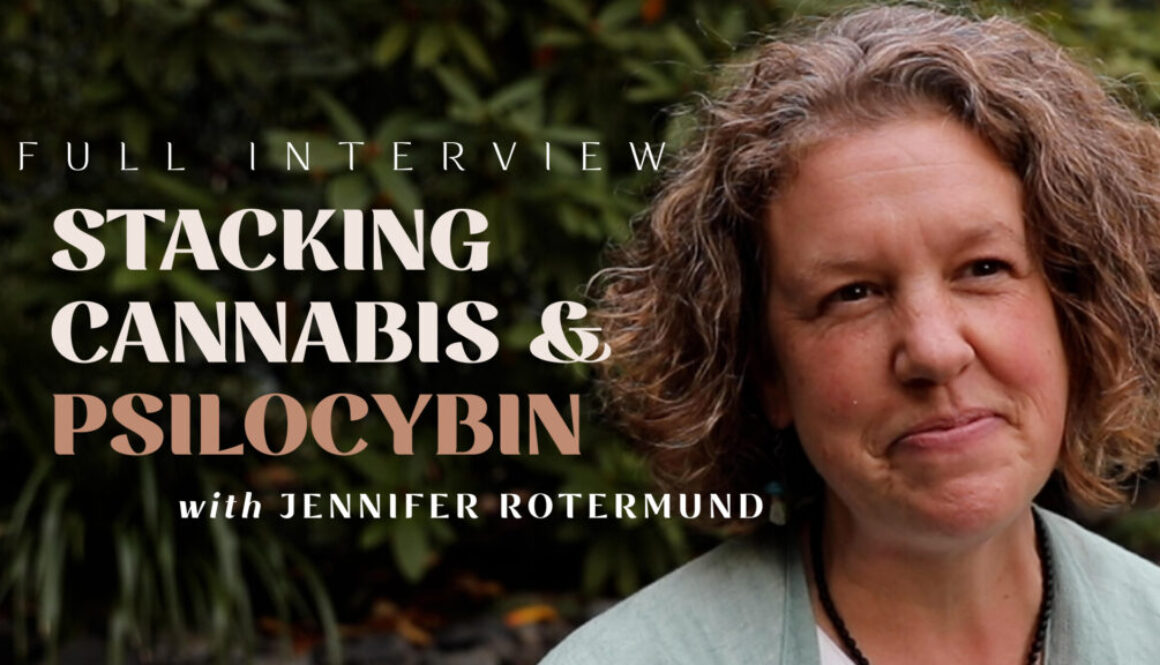
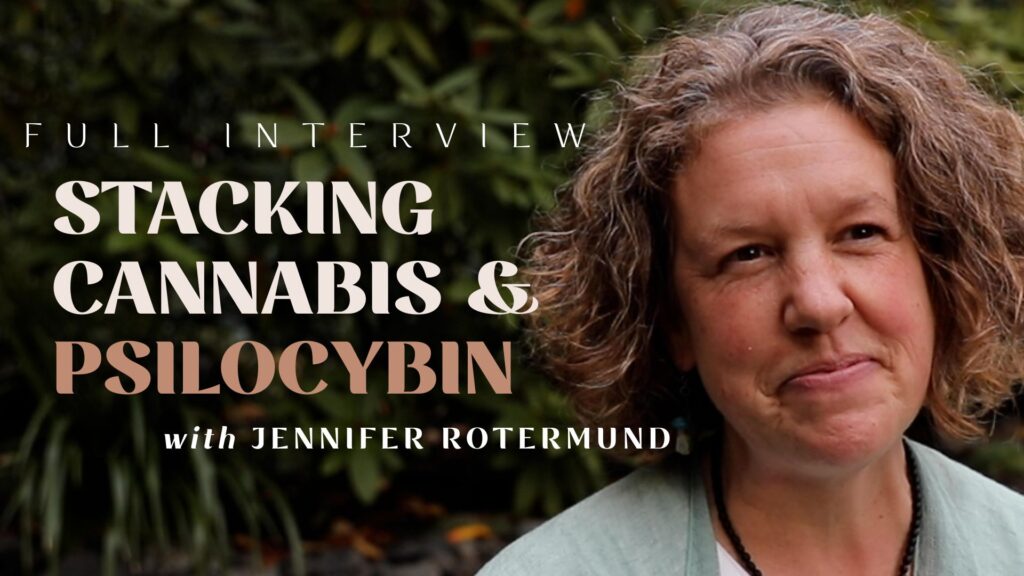
Jennifer Rotermund is a psychedelic integration coach. In this interview we discuss the healing properties of cannabis and how to stack it with psilocybin for additional benefits
Jennifer Rotermund is an Entheogenic Integration & Addiction Recovery Coach, a Cannabis Health & Wellness Coach and a Shamanic Practitioner/Sacred Ceremonialist. Jennifer operates a coaching business called Gaiaentheos https://gaiaentheos.com/
Cannabis is an amazing medicine. We have this incredible endocannabinoid system in our body that we’ve only known about in science for about 25 or 30 years.
Recap of our interview with Jennifer
https://www.youtube.com/watch?v=TyJSmCF4Im0
Watch the full interview with Jennifer Rotermund
https://vimeo.com/879582423
What do you do as a cannabis health and wellness coach?
Jennifer: There’s a lot to cannabis, It’s very nuanced. A lot of people, especially in a legal state like this, it’s easy to obtain cannabis and a lot of people just jump right in. They go to a dispensary, they just buy some product, try things and have the experience without knowing what they’re really taking.
It’s so easy to do and I’m glad I’m glad we at least have access. I’d rather that than not. But really,there’s a large variety of different cannabinoids, different Terpenes And each one of those in different combinations creates different medicine. And so with cannabis, we say start low and go slow.
I encourage people to be willing to give it some time to slowly move through different types, even all the ingestion methods available today. So there’s so much variety available with the medicine. And so it’s nuanced and it takes some time to figure out.
Can you microdose cannabis?
Jennifer: Yes, absolutely. I often hear from people. ‘Yeah, I tried some and I got way too high. I got way too paranoid and so I can’t do it. It’s just not my medicine.’
And when I hear that, I know that that means that they simply had too much THC for their body, for their system.
We have this incredible endocannabinoid system in our body that we’ve only known about for about 25 or 30 years. And that endocannabinoid system is a master controller and it actually we now know that it regulates just about every other system in the body.
Cannabis so potent. It’s so easy to take too much. And often people do. And so starting with really small doses is important. I work with people to start really low, start low and go slow as they say in the field. Somewhere between 2 to 5 milligrams.
I often start with CBD, which is incredibly healing, and it has most of the same properties as THC. Starting with like 2 to 5 milligrams of CBD and addressing whatever it is that someone has come to me to talk about whether it’s sleep or mood stabilization or something else. You can start really small and then slowly calibrate up from there and there’s no need to automatically go right into getting high. There’s just no need.
Can you stack psilocybin mushrooms with cannabis?
Jennifer: It absolutely is possible. Actually, the science has just come around to this and caught up to this. Our endocannabinoid system, which is the system that cannabis connects with, it’s a master regulator in our body. That endocannabinoid system actually beautifully harmonizes with our serotonin system. Serotonin is what is released when we take magic mushrooms or psilocybin and it’s the one neurotransmitter that works throughout our entire body.
Serotonin is at the basis of our grounded contentment and joy. It is often what is dysregulated when people are clinically depressed or anxious. Psilocybin has a healing realigning effect on the serotonin system.
Science beautifully and wonderfully has found that cannabis stacked or combined with psilocybin activates both the endocannabinoid system and the serotonin system in the body.
And the two of those already are working to harmonize with one another. And these medicines just actively support that.
It helps with mood stabilization. So depression can be supported for people and healed on some level. And just feeling really good often. And sleep comes right along with that. With that ability to to just feel calm and grounded and naturally really good during your day allows for better sleep.
There’s a lot of research being done around headache disorders and actually a lot of breakthroughs around the most serious headache disorders, migraines and cluster headaches are being directly impacted and in some cases completely eliminated for people.
I tend to work with people around the microdosing space so we’re looking at a 10th to a 20th of a journey dose.
We’re talking anywhere from 50 milligrams to maybe 500 milligrams or psilocybin. And in that 2 to 5 mg range for cannabis.
How do you approach integration with these medicines?
Jennifer: Integration is kind of a buzzword these days in the psychedelic field and for good reason. It’s really important taking this material or these insights or spiritual developments or clarity of mind, or whatever it is that people are receiving from these medicines. We want them to not just be a one time experience while you’re on the medicine. We want you to have this become part of who you are forever. and integration is that process.
Basically integration is making something whole. That’s one definition or interweaving something new that you’ve learned from new experience with knowledge you already have.
One way for integration is to reflect internally and put language to the experience you’re having, actually giving it language. And one really great way to do that is to circle around with other people in a safe and inclusive space and have the opportunity to share your experience. For some people it’s the first time they’re doing that. Putting language to the experience is that first critical step with integration, because once you’ve given it language, it becomes more real for you. And from there you can take actions.
Once you take an action, any action, even a small action, that is the thing that weaves this experience into your life long term. But you have to be able to language it first.
Can you talk about addiction, recovery and plant medicine?
Jennifer: These medicines have this way of cutting right through or moving beautifully, gracefully, right through all the layers of life. All the layers we build up: the calluses, the wounds that create these layers of traumas we’ve had that create layers around who we really are and coping mechanisms and then addictive behaviors.
And these medicines have this way of moving right through all of those layers, getting right to the true self and giving space for that true self.
They don’t do the work for you. There’s still work to be done in addiction recovery. They’re still the work, the work of recovery to do. However, these medicines are being found to make that work just a little easier.
By recovering your true self. And for some of us in the recovery field, that might be the first time in your life that you’re experiencing your true self, your divine self, that spark that you dream about knowing in yourself that you feel like is in there somewhere, but is maybe so covered up with all of the wounds and traumas of life that you have not felt that in a long time, or maybe not in a time that you remember.
With safe use of these medicines and with recovery support, people are finding that it just makes that healing path of recovery so much easier. So again, it doesn’t do the work for you, but it just makes the work you need to do easier.
Support The Normalize Psychedelics Project
It’s our mission to create a platform for healing testimonials involving psychedelics to help shift the public narrative in a meaningful way. If this content has given you value, please consider supporting us.
Share these videos and other healing testimonials with your friends and family
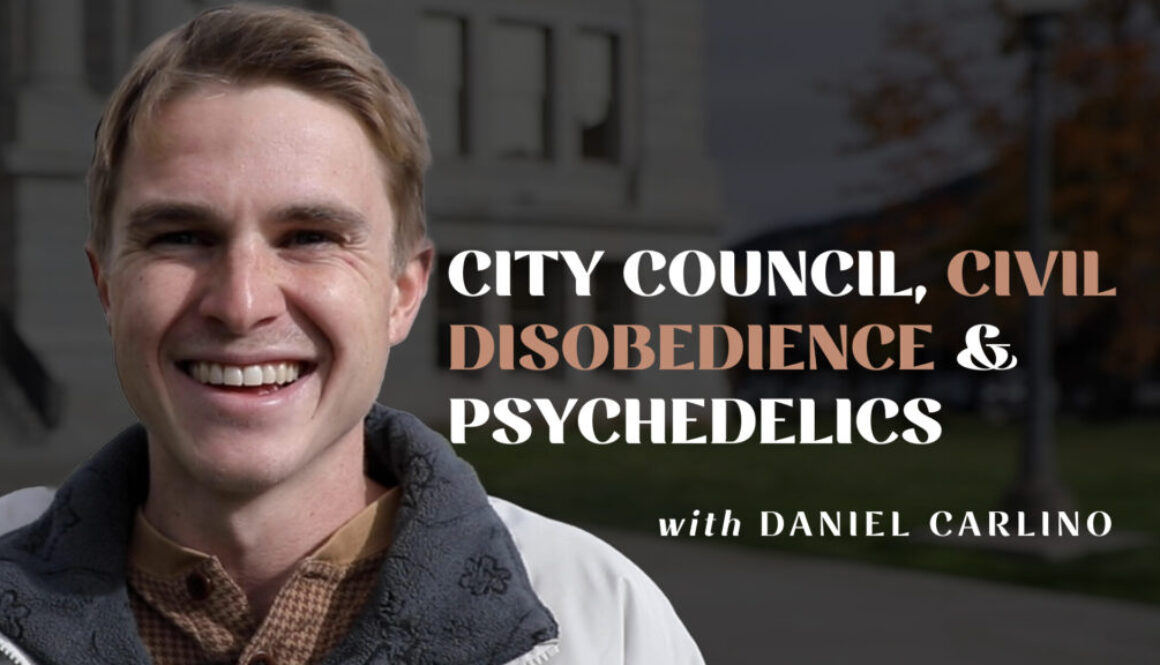
Daniel Carlino is a council member in Missoula, Montana. He is dedicated to decriminalizing plant medicines and he’s the youngest council member in Missoula history.
Daniel Carlino is a council member in Missoula, Montana. He is dedicated to decriminalizing plant medicines and he is the youngest council member in Missoula history. We were fortunate that he joined us for an interview just outside of the capital building.
“If every politician had a psychedelic experience, I think we would be getting way better outcomes in this world” -Daniel Carlino
Daniel Carlino’s history with psychedelics
Daniel: I’ve had a lot of life-changing experiences through psychedelic experiences with psilocybin or DMT, and others. Psychedelics helped me just think about the way the world works and realign my worldview with just trying to be the best person I can be.
It’s helped me with times where I’ve been depressed or sad for a long period of time and it helped me break that by knowing that there’s a lot of new things I can learn in the world and a lot of stuff that’s worth being happy for.
I am somebody who I would never expect to be in a politician. I started studying environmental studies here in Missoula, and at that time I realized how bad it is with the climate crisis and the way that human relationship is with nature and just the harm that we’ve done.
I’ve been on beautiful hikes around Montana where I’ve been having a mushroom experience and just thinking about what I can do to try and change this.
“And part of the reason that I got into politics is just believing in myself through psychedelic experiences and thinking ‘Hey, I can change the world and step up to the plate to be in politics and be an activist.'”
https://www.youtube.com/watch?v=wFhjfbSaeyg
What is a city council?
Daniel: So in the city council we were supposed to represent everybody in town and best we can and we work to pass local laws and local policies. So, for example, if the city Council agreed that we want to decriminalize nature, the police department and health department and everyone else who works for the city would have to go along with that and adapt to it.
In Missoula, there’s 12 of us on the city council, and we work to make local laws. We work on our zoning, which decides what can be built where and we also work on the city budget. So we decide how much money goes to the police or to the fire department or to our parks and trails and things like that.
What can the city council do about decriminalizing psychedelics?
Daniel: So part of what we were asking for was for police to not use any more time or funds on trying to arrest people for psychedelic use, possession, or growing. We were asking our county attorney here to throw out any cases that they’ve gotten around this too, but the city council, he said, wasn’t ready for this. So we ended up tabling the Decriminalize Nature resolution.
We didn’t have all the votes together, so we ended up tabling it for the meantime to give council members more months to learn more from our constituents and people about why we want to decriminalize nature and give them some more time to just soak in the facts and data around why this is a good idea.
There were more people that spoke out in favor of decriminalize nature than anything else this year- over 100 or so Missoula people came out to speak out! We had multiple addiction counselors and veterans and other people who had suffered from PTSD. That helped. We had a pretty wide coalition of people in town that were speaking in favor of this.
Why is it important that we decriminalize before we legalize?
Daniel: I think it’s really important that we decriminalize nature first because we want to make sure that there can be an abundance of naturally grown psychedelics around. We want to make sure that there’s not too much regulation that gets to decide who can grow what and who can have what.
We want to make sure that everybody has access to growing these medicines and is able to provide for themselves and not have too many governmental laws in place that would restrict that in the first place.
On civil disobedience and psychedelics
https://www.youtube.com/watch?v=TVJQGkkCrH0
Daniel: Civil disobedience has definitely changed the United States and changed politics. Some civil disobedience that I’ve been involved in is just like standing in front of a train full of oil and coal. But I think civil disobedience to help decriminalize nature is a good method.
The rule of social movements is that every time 3.5% or more of the population has gotten involved in sustained social movements, every single social movement has been successful. With civil rights movement or women’s suffrage movement and other movements across the entire world, this has always been true.
The social movement to decriminalize nature is inevitably going to be successful. But I think it’s a great idea to lean on our neighbors and friends in the meantime to find access to these naturally growing psychedelics.
So essentially, getting more people involved can mean educating somebody about it or helping your friend to find psychedelics or going out to your city council and being like ‘Hey, I’m somebody who wants to see this be decriminalized.’
If the police come to arrest the people that are running illegal distribution of psychedelics, that the civil disobedience would be gathering a big crowd of people and physically blocking the police them from arresting them.
Civil disobedience would be to try and stop the government from enforcing these unethical laws with the mass numbers.
Watch the full interview with Daniel Carlino
https://vimeo.com/877379856
Support The Normalize Psychedelics Project
It’s our mission to create a platform for healing testimonials involving psychedelics to help shift the public narrative in a meaningful way. If this content has given you value, please consider supporting us.
Share these videos and other healing testimonials with your friends and family
Dan was a Fundamental Baptist Pastor for a big chunk of his life and Lorri was a mother who suffered from depression for much of her life. Dan and Lorri both had life transforming psychedelic experiences that they agreed to share with us. We were eager to listen.
Discovering psychedelics after 60 with Dan and Lorri
Watch “Spiritual Awakening with Bufo Alvarius”
I come from an Ohio Baptist fundamental background, and my father was a pastor and I was a pastor as well, a fundamental pastor in New York City and Las Vegas. -Dan Sabaka
https://www.youtube.com/watch?v=Tc2flAakTsg
Watch “Mother Using Plant Medicine: Lorri describes her experience with Bufo Alvarius”
The medicine acted as nature’s electroshock therapy and cured me of depression, a lifetime of depression. -Lorri
https://www.youtube.com/watch?v=hqDvJfO_kT0
Watch the full interview with Dan & Lorri
https://vimeo.com/875286332?share=copy
What do you do for the community?
Lorri I’m from Olympia, Washington, and we would like to start a psychedelic integration circle there. So we’ve come to the Port Townsend Society Circle a time or two to find out how they conduct their circles. But anyway, we’ve come here to learn from those who have gone a little farther ahead in the process than we have as far as integration and decriminalization. We’re interested in all of those fronts, but especially with integration.
How does it feel to be able to be in an open room and just openly talk about psychedelics?
Dan It’s kind of a hearth, a home kind of feeling.
We were just speaking with the couple and I just witnessed lots of folks who are dying to have someone listen to their experience. And because experience is such a dynamic thing to be able to share with someone listening back is pretty prolific and beyond the clinical just somebody to listen and say, ‘Yeah, I’ve done that, you know, I connect to that.’
That’s pretty cool.
I come from an Ohio Baptist fundamental background, and my father was a pastor and I was a pastor as well, a fundamental pastor in New York City and Las Vegas.
-Dan
And I moved to Olympia about three years ago. And I’m 68 right now.
How did you come to the plant medicines?
Lorri Well, my first significant psychedelic experience was ayahuasca.
In 2017, my son and I had sort of a private ceremony, which was amazing, life changing. But the real kicker was the Bufo in 2020. And I did that because my oldest daughter had done it and recommended that I do it as well, and in fact bought me a session for Mother’s Day.
And so I came at it from an entirely different direction than most people do. My child who was recommending to her mother that she have this experience.
The medicine acted as nature’s electroshock therapy and cured me of depression, a lifetime of depression. -Lori
And that was not an expectation going in. I just went in wide open to receive whatever it was I was going to receive from that sacrament, medicine or tool, whatever you want to call it.
And it took a little while for me to realize a few months later that I was free of depression after a lifetime of depression.
What plans do you have for your community?
Lorri We’re creating Integration Circle in Olympia where other people who have just had not just a bufo experience, but any kind of psychedelic experience. They can come and share that with other people who have had those kinds of life altering experiences as well.
And for me it’s been more of an unfolding. The first experience was just an explosion. It unfolded as the weeks and months went by and it would have been nice to have a community to talk to.
Luckily, I have Dan and our soul sister, and the three of us helped each other integrate.
I would say we’re trying to create a safe, soft place to land after we’ve had one of these just paradigm shifting experiences.
Bufo is only about 10 minutes. It is called the business person’s psychedelic because you can literally do it on your lunch hour and go back to work, but you will be transformed. And it is nice to have a place to go where you can talk about that transformation.
Dan Mother Earth has all this capacity to connect with this human condition that is filled with consciousness and filled with all this beauty and wonder.
I believe that Mama Earth knows the way as I know my way. -Dan
Additional Resources
https://www.youtube.com/watch?v=ODHBwzYyvc0
Support The Normalize Psychedelics Project
It’s our mission to create a platform for healing testimonials involving psychedelics to help shift the public narrative in a meaningful way. If this content has given you value, please consider supporting us.
Share these videos and other healing testimonials with your friends and family
Normalizing Psychedelics, Port Townsend, & Community Healing || Erin Reading
Erin Redding is a community organizer, activist and works with the Port Townsend Psychedelic Society.
Meet Erin Reading
Erin Redding is a community organizer, activist and works with the Port Townsend Psychedelic Society.
Watch “Inside our favorite plant medicine community”
https://www.youtube.com/watch?v=K8FlYT3uFTg
How do you create such a strong community around psychedelic use?
Honestly, I feel like the number one way we did that is just by acting like it was normal and talking about it like it was normal. And once more and more people started doing that other people saw that people weren’t reacting poorly and I honestly haven’t had a single person at all of my time here You I act weird when I talk about working with psychedelics.
Everyone’s just like, Oh, that’s so interesting. How do I get involved? Like, I heard this story. I read that research. I saw that movie. And people are really passionate about these medicines around here. So I do live in a place where people are already very open. But then we also host a lot of events that just bring people together and are very welcoming.
And I think that’s the biggest element is just making sure people feel included, that they’re welcome, that they’re seen you know. We really feel like community is the biggest part of the medicine.
We really feel like community is the biggest part of the medicine.
What are some benefits of healing in community rather than going to a retreat center?
For me personally, healing in community is where it’s all about.
Oftentimes, people will go to a retreat center, not know anyone, and then come home and then have to integrate solo, basically. And here, people get to be in retreats together, get to do medicine work together, get to peer support one another, have community based circles.
And the same people that you sit in ceremony with, you’re going to see at the co op, and at the farmer’s market, and at dances, and so you’re building those relationships and supporting each other in daily life and integrating and embodying what you learned in ceremony. And it’s not always easy because medicine work brings up shadow and challenges.
And when you do medicine work in community, it brings up challenging community dynamics as well as your interpersonal dynamics, and so there’s often work to do afterwards in terms of leaning into conflicts and learning from those differences and learning from whatever projections arise and sorting through those together as a community and actually having it build us or strengthen our relationships.
Where does the passion come from for being such an advocate for plant medicine?
I have had many, many healing experiences myself.
I feel like I am the person I am today because of my work with these medicines, especially in community.
But almost more importantly, I’ve seen so much healing for other people, and I’ve also seen community webs strengthen in profound ways. And seeing that, It’s like the mycelial network is growing stronger where I live, and it feels like it’s making our community healthier and happier, and I get to be part of that healthy, happy community, which is really rewarding.
And I also, I just love where I live so much, and I want us to do things right here.
Port Townsend is a really magical town. What is the history of Port Townsend and psychedelics?
I can talk about some of the history of psychedelics. I wasn’t here back in the 60s, but I know a lot of people who were very involved in the 60s with psychedelics moved to this area.
It was like art haven land base, a lot of beautiful mountains and water around here. A lot of musicians. There were more in the 60s and 70s, and a lot of those people still live here and carried that culture forward.
I think, the early 1970s, one of the first conferences on entheogens was hosted at Fort Warden in Port Townsend. So we do have a history of psychedelics being very prominent in our town.
When I moved here six years ago, I honestly have never lived in a place where I met more people who worked with psychedelics on all sides of political parties.
Watch the FULL interview with Erin
https://vimeo.com/235215203
Support The Normalize Psychedelics Project
It’s our mission to create a platform for healing testimonials involving psychedelics to help shift the public narrative in a meaningful way. If this content has given you value, please consider supporting us.
Share these videos and other healing testimonials with your friends and family
Tell us about your personal story with plant medicine?
I’ve had multiple experiences with the psychedelics that have really motivated me to get more involved. I went through multiple years of opiate addiction and was really in a deep struggle where I didn’t feel I had really any self-worth. And I’d gotten to the point where I was telling my family that I didn’t know if there was more for me, if that was my story.
And I remember just a very powerful psychedelic experience where not only I felt this extreme love and worth and that there was more for me, but also I had this moment of just, just kind of feeling like I was wasting my life away. And you know that every day I was just stuck in the same routine and it was just happening over and over and over again.
And that (psychedelic) experience really launched me towards sobriety.
And I think psychedelics could have really helped me speed that process up. But unfortunately, getting involved with a lot of treatment facilities and stuff like that, now they really push away from any use of anything and that includes entheogenic plants.
So, you know, I really kind of buried the use of those and didn’t didn’t use them to help, which I think made that more of a struggle getting to that point of sobriety.
But once I finally was able to get there, I have been probably clean for about four years and unfortunately had a family member that passed away due to opiate addiction. And so at that point I really felt this calling towards psychedelics again and psilocybin specifically. So I went on a mushroom journey in nature because nature always seemed to be very special to her.
And during that experience, I felt this really heavy fog rolling around me and I sat down and felt like it was her presence. And it just gave me time to really cry and communicate with her and it was extremely powerful. And even though the passing of my sister still hurt, it really helped with that healing process.
Even though the passing of my sister still hurt, it really helped with that healing process.
And so since then, it’s really launched me to get more involved with psychedelic societies and organizations that are helping veterans with PTSD and other things.
Can decriminalization help heal a community?
Yes, I think in many different ways. So many people have struggled many times. I’ve heard now that my whole adult life I’ve been on a mix of antidepressants and, you know, multiple at the same time. And this is the first time in my life that I haven’t been taking them.
And I feel better than I have ever. I mean, that’s extremely healing for our community.
Just the happiness that psychedelics can spread, the love the psychedelics can spread. We should all be more loving to one another. And so I think all of that is really critical in healing our communities.
Just the happiness that psychedelics can spread, the love the psychedelics can spread. We should all be more loving to one another.
Has plant medicine really helped you in your relationship?
I feel like plant medicines helped me in all my relationships. I mean, whether that be from microdosing. You know, when I microdose, I feel like I can be much more understanding and less likely to get irritated or agitated by something. You know, I can take a step back and take a breath and kind of reevaluate things.
You know, the heavy trips can be very resetting and helping you kind of really get back to a grounded space. And then also just kind of light trips that are in between. You know, there’s times that me and my wife where I’ve been the one on a light dose, but we’re laughing and crying together because that energy spreads and is infectious and, you know, playing on the ground with my my child can be very special, you know, on those in those light experiences.
And so I think it can be powerful for all relationships.
For someone who’s in a really deep, dark space and there’s just no light at the end of the tunnel from where they stand, what do you have to say to those people?
It’s sometimes hard to see, but there’s people out there that can love you. And sometimes it’s just trying to find that space where you can feel that love, you know, because you are worth being love so just try and find that community.