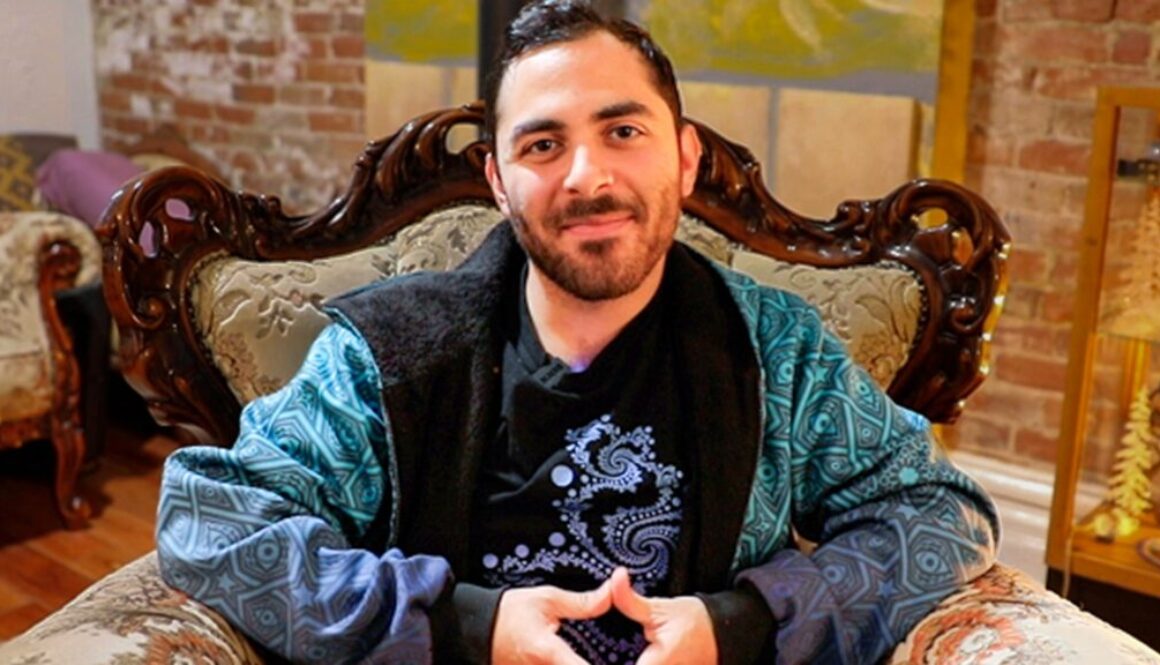
Larry Norris is the co-founder, national organizing director, and board member for Decriminalize Nature. He also has a nonprofit organization here in the San Francisco Bay Area called Entheogenic Research Integration & Education (ERIE). In this interview Larry dives deep in what it means to claim back agency over your consciousness.
Larry wrote his dissertation looking at Ayahuasca experiences and archetypes of transformations that truly impact an individual for not just months or years, but decades after.
https://www.youtube.com/watch?v=RNtAV8RAk0Q
Watch: Who Has Agency Over Our Consciousness Pt. 1
Watch: Who Has Agency Over Our Consciousness Pt. 2
https://vimeo.com/933844704/41d522fedb
Why should we focus on a relationship with Nature?
Larry When we began in December of 2018 to have this conversation, our conversation was around, okay, so there’s decriminalization of mushrooms happening in Denver, legalization of mushrooms happening in Oregon.
What can we do here in Oakland and so part of that conversation is saying, you know, hey, why are we doing just one substance, we have a lot of different communities in the San Francisco Bay area. There’s an ayahuasca community, there’s an Iboga community, there’s a DMT community, there’s mushroom community.
So why are we going to just limit to just one material?
So we said, let’s have a bigger conversation about nature. It’s not just about one particular plant or one particular mushroom, but our relationship with nature.
Who has agency over your consciousness?
What can we learn from nature? We are nature. Why are we criminalized?
And so these are the kind of conversations we wanted to have. And I think once we started having that conversation, it opened up a much broader understanding of policy.
So by having all the different plants and mushrooms together really allowed us to have this conversation about nature, which then goes into what are we doing to the environment?
What are we doing to ourselves?
What are the issues around homelessness?
What are the issues around economic reform?
What are the issues around people and their connection to each other?
And so by having this conversation about nature, we were able to have a much bigger one.
Make a Donation
Your donation will help us publish more personal stories involving psychedelics to transform public opinion, reduce stigmas, and redefine wellness. It can also help self lives.
Ramzy Abueita is a leader in the psychedelic renaissance and community weaver. He was part of the decriminalization movement in Ann Arbor, Michigan and Colorado statewide and now he lives in Boulder, Colorado. In this interview Ramzy shares with us how he started a grassroots psychedelic movement in Boulder that changed policy!
Ramzy has a degree in neuroscience from the University of Michigan and has presented on the neuroscience and neurobiology of psychedelics to the Center for Consciousness Science at the University of Michigan Medical School, the Michigan Psychedelic Society, and to the public. Ramzy is the owner of Myco Cafe, a mushroom-themed coffeeshop and art cafe in Boulder.
How did you get started in the Decriminalization Movement?
Ramzy: My involvement in the decriminalization movement actually started in Ann Arbor, where I had studied neuroscience at the University of Michigan, and I was still living in Ann Arbor after I graduated.
There was a new movement that had emerged in Ann Arbor coming from the Michigan Psychedelic Society as a group called Decriminalize Nature, Ann Arbor and Decriminalize Nature Ann Arbor was following in the footsteps of Oakland, California, and Santa Cruz, California, which were the first two cities to implement a decriminalized portion of all the entheogenic plants and fungi.
How were you able to start a local psychedelic movement in Ann Arbor, Michigan?
In Ann Arbor, we were following a really simple strategy. We wanted to see what would happen if we got members of our community to basically tell their stories to members of City council, the local elected leaders.
And those stories are very simple and very personal. You know, people just went on the record and told what their experiences were like.
You know, they told stories of healing from postpartum depression.
They told stories of recovering from PTSD.
They told stories of rekindling relationships with family members that they’d lost touch with.
And these stories are very heartfelt.
It was as simple as getting people to record videos, video testimonies of their stories and just telling those stories, sending those videos to members of the city council.
It took a few weeks of directly speaking to City council before a member of the City Council introduced the resolution to the vote. We were a little bit taken aback by the speed and the rate at which Ann Arbor went ahead with decriminalization.
We thought they were just going to introduce the resolution and talk about it and then table it and bring it up at another meeting. And then, the next meeting, they were going to talk about it some more and then table it again and maybe, you know, three or four meetings later, they would finally be ready to bring it to a vote.
But to our surprise, the very day that they introduced the resolution to the Ann Arbor City Council, they put it to a vote.
And then all of a sudden, the Ann Arbor City Council voted to decriminalize 11 to 0. It was unanimous. It was a unanimous vote that completely caught us off guard. We weren’t expecting it to be unanimous.
We weren’t even expecting them to vote. But, you know, it’s a testament to the power of how our stories influence our local elected leaders.
How should community members record their personal testimonials to send to their City Council ?
Ramzy: We are very peculiar about having this be a true grassroots movement. And what that means is we let people show up and speak from their hearts.
We give some very rough guidelines such as be sure to start by introducing yourself and then make sure your statement is under 2 minutes and practice your statement.
But really, we just let them go up and on the podium and tell their stories straight from their hearts and we get testimonies from very different angles.
Some people approach it from their very personal experiences. Some people talk about it from the scientific side. They talk about all the scientific evidence and the research articles and the studies and other people talk about being therapists and in their therapy practice, seeing all the transformation in their clients. Other people talk about it from a cultural perspective. Other people talk about to the deep legacy of Indigenous practice.
In letting people show up and speak from their authentic voice, It allows us to get a constellation of perspectives of how people in the community engage and relate with these substances.
Can we trust our local elected officials?
Ramzy: You know, you can be cynical about what politicians can be like as you get higher up the rungs, higher up the echelons of the political sphere. I would say the higher up that ladder you go, the more influenced by money, the more pay to play politics becomes.
On the local level, that’s where you have the true grassroots voices. That’s where the local elected leaders, the members of the community that are your neighbors, they’re people who are walking their dogs in the morning and run into people in the community.
So when the community speaks, they listen. They tend to be compelled.
Make a Donation
Your donation will help us publish more personal stories involving psychedelics to transform public opinion, reduce stigmas, and redefine wellness. It can also help self lives.
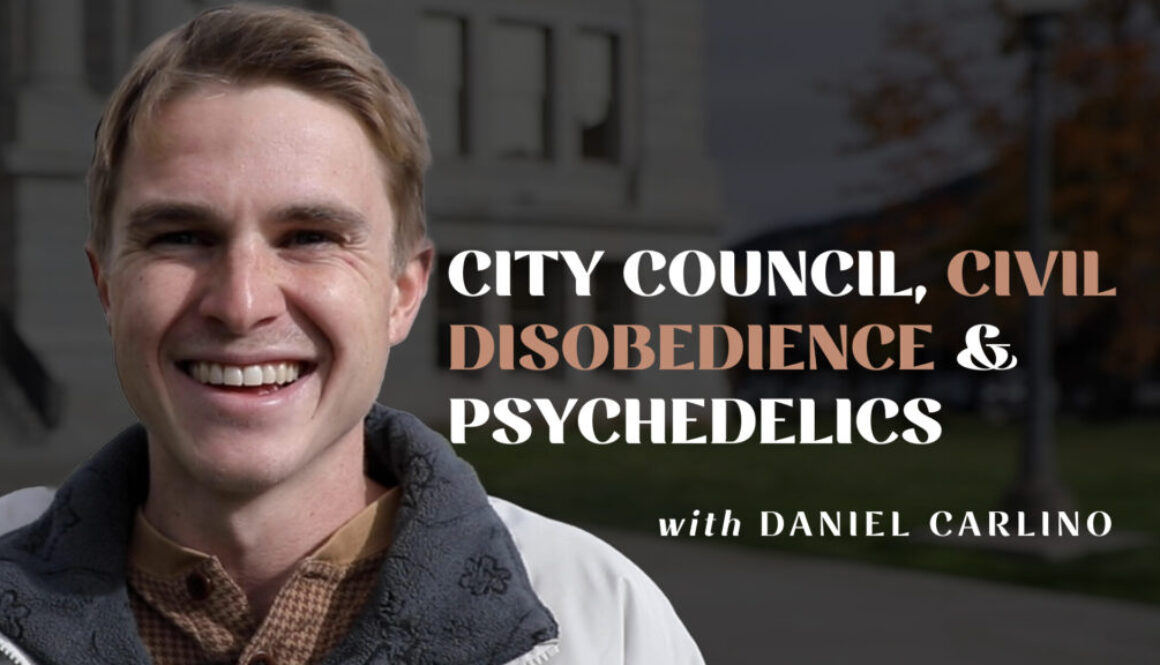
Daniel Carlino is a council member in Missoula, Montana. He is dedicated to decriminalizing plant medicines and he’s the youngest council member in Missoula history.
Daniel Carlino is a council member in Missoula, Montana. He is dedicated to decriminalizing plant medicines and he is the youngest council member in Missoula history. We were fortunate that he joined us for an interview just outside of the capital building.
“If every politician had a psychedelic experience, I think we would be getting way better outcomes in this world” -Daniel Carlino
Daniel Carlino’s history with psychedelics
Daniel: I’ve had a lot of life-changing experiences through psychedelic experiences with psilocybin or DMT, and others. Psychedelics helped me just think about the way the world works and realign my worldview with just trying to be the best person I can be.
It’s helped me with times where I’ve been depressed or sad for a long period of time and it helped me break that by knowing that there’s a lot of new things I can learn in the world and a lot of stuff that’s worth being happy for.
I am somebody who I would never expect to be in a politician. I started studying environmental studies here in Missoula, and at that time I realized how bad it is with the climate crisis and the way that human relationship is with nature and just the harm that we’ve done.
I’ve been on beautiful hikes around Montana where I’ve been having a mushroom experience and just thinking about what I can do to try and change this.
“And part of the reason that I got into politics is just believing in myself through psychedelic experiences and thinking ‘Hey, I can change the world and step up to the plate to be in politics and be an activist.'”
https://www.youtube.com/watch?v=wFhjfbSaeyg
What is a city council?
Daniel: So in the city council we were supposed to represent everybody in town and best we can and we work to pass local laws and local policies. So, for example, if the city Council agreed that we want to decriminalize nature, the police department and health department and everyone else who works for the city would have to go along with that and adapt to it.
In Missoula, there’s 12 of us on the city council, and we work to make local laws. We work on our zoning, which decides what can be built where and we also work on the city budget. So we decide how much money goes to the police or to the fire department or to our parks and trails and things like that.
What can the city council do about decriminalizing psychedelics?
Daniel: So part of what we were asking for was for police to not use any more time or funds on trying to arrest people for psychedelic use, possession, or growing. We were asking our county attorney here to throw out any cases that they’ve gotten around this too, but the city council, he said, wasn’t ready for this. So we ended up tabling the Decriminalize Nature resolution.
We didn’t have all the votes together, so we ended up tabling it for the meantime to give council members more months to learn more from our constituents and people about why we want to decriminalize nature and give them some more time to just soak in the facts and data around why this is a good idea.
There were more people that spoke out in favor of decriminalize nature than anything else this year- over 100 or so Missoula people came out to speak out! We had multiple addiction counselors and veterans and other people who had suffered from PTSD. That helped. We had a pretty wide coalition of people in town that were speaking in favor of this.
Why is it important that we decriminalize before we legalize?
Daniel: I think it’s really important that we decriminalize nature first because we want to make sure that there can be an abundance of naturally grown psychedelics around. We want to make sure that there’s not too much regulation that gets to decide who can grow what and who can have what.
We want to make sure that everybody has access to growing these medicines and is able to provide for themselves and not have too many governmental laws in place that would restrict that in the first place.
On civil disobedience and psychedelics
https://www.youtube.com/watch?v=TVJQGkkCrH0
Daniel: Civil disobedience has definitely changed the United States and changed politics. Some civil disobedience that I’ve been involved in is just like standing in front of a train full of oil and coal. But I think civil disobedience to help decriminalize nature is a good method.
The rule of social movements is that every time 3.5% or more of the population has gotten involved in sustained social movements, every single social movement has been successful. With civil rights movement or women’s suffrage movement and other movements across the entire world, this has always been true.
The social movement to decriminalize nature is inevitably going to be successful. But I think it’s a great idea to lean on our neighbors and friends in the meantime to find access to these naturally growing psychedelics.
So essentially, getting more people involved can mean educating somebody about it or helping your friend to find psychedelics or going out to your city council and being like ‘Hey, I’m somebody who wants to see this be decriminalized.’
If the police come to arrest the people that are running illegal distribution of psychedelics, that the civil disobedience would be gathering a big crowd of people and physically blocking the police them from arresting them.
Civil disobedience would be to try and stop the government from enforcing these unethical laws with the mass numbers.
Watch the full interview with Daniel Carlino
https://vimeo.com/877379856
Support The Normalize Psychedelics Project
It’s our mission to create a platform for healing testimonials involving psychedelics to help shift the public narrative in a meaningful way. If this content has given you value, please consider supporting us.
Share these videos and other healing testimonials with your friends and family
Normalizing Psychedelics, Port Townsend, & Community Healing || Erin Reading
Erin Redding is a community organizer, activist and works with the Port Townsend Psychedelic Society.
Meet Erin Reading
Erin Redding is a community organizer, activist and works with the Port Townsend Psychedelic Society.
Watch “Inside our favorite plant medicine community”
https://www.youtube.com/watch?v=K8FlYT3uFTg
How do you create such a strong community around psychedelic use?
Honestly, I feel like the number one way we did that is just by acting like it was normal and talking about it like it was normal. And once more and more people started doing that other people saw that people weren’t reacting poorly and I honestly haven’t had a single person at all of my time here You I act weird when I talk about working with psychedelics.
Everyone’s just like, Oh, that’s so interesting. How do I get involved? Like, I heard this story. I read that research. I saw that movie. And people are really passionate about these medicines around here. So I do live in a place where people are already very open. But then we also host a lot of events that just bring people together and are very welcoming.
And I think that’s the biggest element is just making sure people feel included, that they’re welcome, that they’re seen you know. We really feel like community is the biggest part of the medicine.
We really feel like community is the biggest part of the medicine.
What are some benefits of healing in community rather than going to a retreat center?
For me personally, healing in community is where it’s all about.
Oftentimes, people will go to a retreat center, not know anyone, and then come home and then have to integrate solo, basically. And here, people get to be in retreats together, get to do medicine work together, get to peer support one another, have community based circles.
And the same people that you sit in ceremony with, you’re going to see at the co op, and at the farmer’s market, and at dances, and so you’re building those relationships and supporting each other in daily life and integrating and embodying what you learned in ceremony. And it’s not always easy because medicine work brings up shadow and challenges.
And when you do medicine work in community, it brings up challenging community dynamics as well as your interpersonal dynamics, and so there’s often work to do afterwards in terms of leaning into conflicts and learning from those differences and learning from whatever projections arise and sorting through those together as a community and actually having it build us or strengthen our relationships.
Where does the passion come from for being such an advocate for plant medicine?
I have had many, many healing experiences myself.
I feel like I am the person I am today because of my work with these medicines, especially in community.
But almost more importantly, I’ve seen so much healing for other people, and I’ve also seen community webs strengthen in profound ways. And seeing that, It’s like the mycelial network is growing stronger where I live, and it feels like it’s making our community healthier and happier, and I get to be part of that healthy, happy community, which is really rewarding.
And I also, I just love where I live so much, and I want us to do things right here.
Port Townsend is a really magical town. What is the history of Port Townsend and psychedelics?
I can talk about some of the history of psychedelics. I wasn’t here back in the 60s, but I know a lot of people who were very involved in the 60s with psychedelics moved to this area.
It was like art haven land base, a lot of beautiful mountains and water around here. A lot of musicians. There were more in the 60s and 70s, and a lot of those people still live here and carried that culture forward.
I think, the early 1970s, one of the first conferences on entheogens was hosted at Fort Warden in Port Townsend. So we do have a history of psychedelics being very prominent in our town.
When I moved here six years ago, I honestly have never lived in a place where I met more people who worked with psychedelics on all sides of political parties.
Watch the FULL interview with Erin
https://vimeo.com/235215203
Support The Normalize Psychedelics Project
It’s our mission to create a platform for healing testimonials involving psychedelics to help shift the public narrative in a meaningful way. If this content has given you value, please consider supporting us.
Share these videos and other healing testimonials with your friends and family
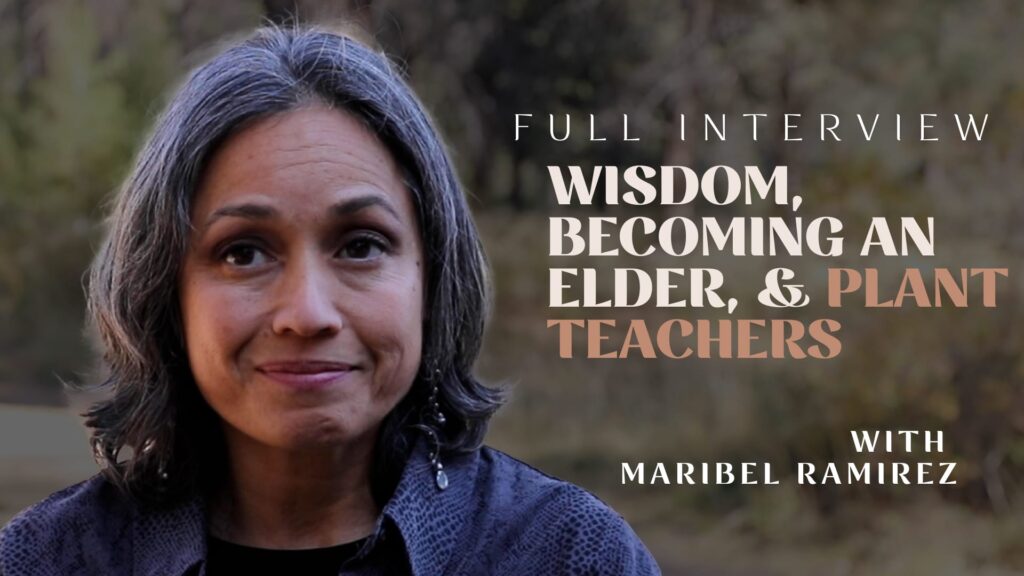
Wisdom, Becoming an Elder, & Plant Teachers || Maribel Ramirez
Meet Maribel Ramirez
Maribel is a mental health/substance use counselor, healer, and body worker. Her lineage includes ancestors from the African continent, China, Indigenous ancestors from what is now Colombia in the South American Continent, and Spain.
Maribel’s conventional education includes a Bachelor of Arts in Literature and a Master of Science in Mental Health Counseling. However, most of her learning has come from time spent in Nature, a well-worn Plant Medicine path with lineage curanderos from Peru, as well as Tibetan and Zen Buddhist teachings, and Hindu/Vedic Spiritual philosophy explored through the path of Yoga.
Maribel is the founder of Liberation Pathways, an organization with a mission to provide healing and wellness services to all people, but especially to marginalized and historically oppressed peoples. Liberation Pathways is located in the ancestral lands of the Cow Creek Umqua, Yoncalla, Kalapuyans, Southern Molalla, Upper Umpqua, and Quuiich tribes (Lower Umpqua).
How are the medical and the ceremonial models different when we talk about psychedelics?
Maribel
I think it’s wonderful that the medical model is starting to understand the value of how sacred medicine, sacred earth medicine and sacred plant medicines are important in our healing and are important in addressing our trauma.
We, as a culture, are carrying a lot of inter-generational and historical trauma, right now. So I don’t want to be redundant in trying to explain how important plant medicines are in healing this trauma that we’re carrying at so many levels.
The medical model is looking at plant medicines from that perspective of bringing the medicines into a laboratory, taking the medicines out of their sacred context and creating dosages and creating protocols and creating spaces that are removing the individual from community and bringing them into an office space, a therapeutic space, and working with that individual in that way.
This is not necessarily wrong. It can be helpful, as we have seen in all the studies that have been conducted now with certain medicines. But when we look at sacred plant medicines, we’re looking at a tradition that are thousands of years old from indigenous cultures.
In these indigenous contexts, the medicines are communed with in a ceremonial way. And healing happens in the community.
And healing also happens when these ceremonial spaces are held by lineage holders and indigenous people that hold generations upon generations of wisdom and knowledge in how to commune with these medicines and how to work with these medicines in the deepest way possible.
So when we look at the medical model, we are not necessarily honoring these indigenous ways of knowing and we’re excluding these indigenous ways of knowing and these indigenous ways of working with the medicines.
How have we come to a place where we do not respect our elders?
Maribel That is such a huge question. But the one place that I can start is that most indigenous cultures around the world have what are known as initiations or rites of passage. So in these initiations there was a marked ritual experience that helped people transition from one developmental stage into another. The main one being from adolescence into adulthood. And during these rites of passage, human beings went down into the depths of soul, into some kind of metaphorical underworld and faced mortality. In facing this mortality, there was a dissolution of self.
And in that dissolution of self, they came back different and there was a village to receive them. And how they came back different is they came back with a knowledge of their gifts and their place in the world and their place in the village. We don’t have that as a culture.
We tried to destroy indigenous ways of knowing and we lost access to these rites of passage. For some of this has happened sooner for some of us it happened later.
So we have a lot of people who are masquerading as adults, but they have not necessarily undergone that initiation that would lead them into a maturity that would allow them to access their wisdom.
So we lack elders in our culture and in lacking elders, we have also become a culture that does not value aging, that fears aging, that fears death. And so I’m trying to bring it all in so that you could see how it’s interrelated. So when we are at death phobic and age phobic culture, we do not cultivate elder hood.
And when we don’t have elders to guide us, we are a culture that’s flailing. We are a culture that has no wisdom holders to turn to when we need direction and we need instruction. Right. And this all corresponds to the breaking down of a village, to the breaking down of a tribe. This all goes back to patriarchy and colonialism and the way that these ways were broken.
But we do have elders in our culture. We just have to find them. They are not readily accessible to us. They’re not part of our village or probably not part of our families. Some of us may have elders in our families if we’re lucky. But we do have to find them.
So Martin Luther King would have been an elder. Nelson Mandela was an elder. Mother Teresa was an elder. Mahatma Gandhi was an elder. We have elders now. Martin Prechtel is an elder. Michael Mead is an elder. James Baldwin was an elder. The Dalai Lama is an elder.
So we have to go to these teachers and it’s not just a matter of watching a YouTube video. We have to dive into their writings, dive into their teachings, dive in to what they were bringing and really learning as much as we can and finding our way into elder hood, finding our own way into initiation, because there’s no village to initiate us.
And so how do we dive into our own initiation? we look at the experiences, the dark experiences, the difficult experiences, and figure out how to mine the gold.
How to grow from these experiences and how to let them transform us. That’s one way. And another way is plant medicine.
Plant medicine are elders, They are guides. As we descend into the darkness of our soul and we come back, different, changed, transformed.
Do elders naturally take on more responsibility?
Maribel Absolutely. This is so correct. I think when somebody starts walking into that threshold of elder hood, one of the ways one of the things that happens is capacity increases, right?
As wisdom increases, capacity increases. And the call of the soul becomes very clear. And so when the elder starts listening to the call of the soul, they automatically start contributing more to the world, more and more into the world.
And so we can look at the elders in our culture and we can see how much they’re holding and how much they’re bringing. And it almost looks superhuman. And as we start walking this path ourselves, we’ll see that capacity increasing within us as a means of the soul telling us what we need to contribute to the world, what we’re here for, meaning and purpose, which is a beautiful thing.
Of all human beings, we’re able to tap into what their meaning and their purpose and their role for humanity is. We would be in a very different situation as a species.
Can you talk about decriminalization versus legalization specifically with ceremonial use?
So I voted for Measure 109. As a therapist, I thought it was a step forward. I thought, my goodness, this is amazing. We’re starting to recognize the importance of plant medicines in our healing, as I mentioned before. And so as I started diving deeper into Measure 109 and attending the Oregon Health Authority meetings, I started to realize that Measure 109 was not going to allow for ceremonial use.
Ceremonial means of communing with the medicines. I also realized that therapeutic use was not in alignment with ancestral ways of knowing. I’m learning from a Mayan Toltec abuela at the moment, whose name is Cardozo Castillos, and he has been very clear in explaining how these therapeutic uses are not necessarily wrong. You know, they can be helpful, but they’re only part of what is possible.
And so that’s when I started realizing, realizing that there’s a problem. I had somebody from the Oregon Health Authority contact me explaining that there were no indigenous voices at the table when they were creating these protocols and these, you know, the outline for the measures. Right. And I said, no problem.
I can get indigenous voices at the table. And we actually did set up a meeting and the abuela came and he spoke to them. But if Maria Sabina came to the United States right now, if she came back from the dead and she came to the United States right now, she would not be able to serve the medicines. And that is the problem. So these sacred ways of knowing are the knowing and the wisdom that comes from indigenous peoples.
When we look at what we’ve done through colonization, we have decided that only one way of knowing is correct. Only one way of knowing is correct. And that’s the knowing of the evidence based practice and the knowing of science and the knowing of Christianity even. And the knowing of the patriarchy and the knowing of capitalism and the knowing of colonialism.
Whereas there’s thousands of years of ancestral knowing that comes from indigenous cultures who lived not in perfection, but in harmony with their environment for thousands of years. And at some point we were all indigenous. At some point Europe was indigenous. Then we had these systems come in and break those ways of knowing.
As soon as those ways of knowing were broken, the disconnection from the earth and the cycles of nature and all of that started happening, the destruction came and that destruction was brought back here to the Americas and we can see the results of it now.
Additional Resources
Ancient Wisdom VS Modern Medicine – What are we missing?
https://www.youtube.com/watch?v=cGwMmJRAmK4&t=5s
Support The Normalize Psychedelics Project
It’s our mission to create a platform for healing testimonials involving psychedelics to help shift the public narrative in a meaningful way. If this content has given you value, please consider supporting us.
Share these videos and other healing testimonials with your friends and family
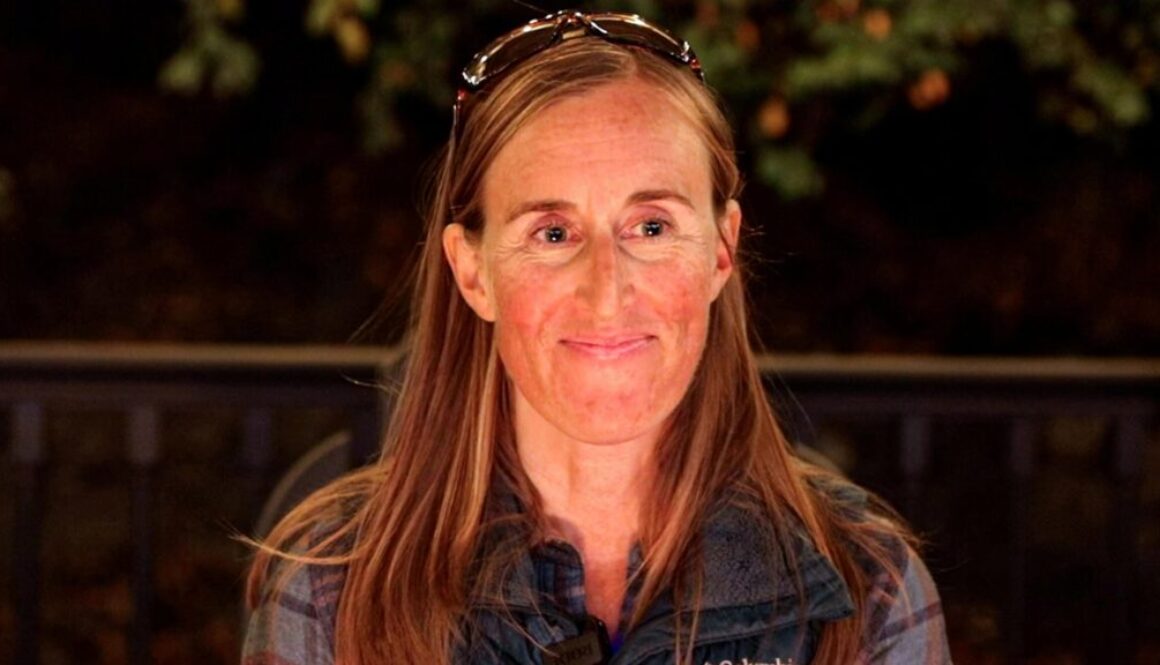
Danielle Daniel was the lead activist of Decriminalize Nature Humboldt when they first passed the bill to DECRIM in Arcata, California in 2021. We were lucky enough to sit down with her in a forest just outside of the city to ask her for HOW she able to do this so quickly.
About Danielle Daniel
Danielle was born and raised in Humboldt County and is dedicated to educating the community about the healing powers of psychoactive plants and fungi, along with providing support to community members during their path of healing.
For the last 10 years she has been studying psychedelics, along with personally benefiting through therapeutic exploration. She has experienced profound personal healing and fulfilment by working with psychoactive plants and fungi.
In May of 2021 Danielle received a Master of Arts in Sociology, with a focus on psilocybin mushrooms. Her thesis focused on those who took psilocybin mushrooms long-term, and explored the experience and motivation behind working with this medicine. You can read her thesis here.
After completing her degree she spearheaded the decriminalization movement in Arcata, CA in May 2021. Danielle became the Lead Organizer of Decriminalize Nature Humboldt. On October 6th 2021 psychoactive plants and fungi were decriminalized in Arcata. Danielle stepped down from her Lead position in February 2022, in order to focus her energy on her offering as a microdosing coach. With the decriminalization of entheogens in Arcata, she is able to share her knowledge and experience about microdosing with those in the community that need guidance and support.
Watch the FULL interview
Decriminalization brought a lot more freedom in the community and a lot more peace- from just being able to ask questions about these medicines to also feeling safe to work with these medicines.
Danielle Daniel Former Lead, Decriminalize Nature Humboldt
We made these shorter videos to you to SHARE
Full Transcript
How were psychedelics decriminalized in Arcata?
I learned about the national movement Decriminalize Nature while I was in the master’s program at Humboldt State University. I did some papers on them and I got to know Larry. And after graduating I did my thesis on mushrooms as well. So after graduating, Larry suggested that I start the movement here in Arcata. And I’m an introvert. I was like, I don’t have any friends that would help me.
There were a couple of business owners that were already interested in Arcata, so we linked up. And after a couple of meetings, I knew right away that they were really busy and I had a ton of time because I just got out of the Master’s program and I was still in study mode. So I took the lead and I got started on Instagram and just put a lot of information out on what entheogens are.
I started writing emails to the Arcata City Council and I started tabling. And the first time tabling, I got another community member who was interested in helping me. His name is David and he is the owner of Humboldt Mycology. We were tabling every Saturday at the Arcata Farmers Market. Being in the community, educating the community, getting that community support is so important.
We were getting community members to sign letters and every week we dropped those letters off at the city council. So we started this right after I graduated in May of 2021. And so by June we already got a council member, Sarah Schaefer, that was behind us, and she got our resolution on the agenda.
During this time, there were more community members that stepped up and that were helping me. And really, this cannot be done without the community and really certain community members stepping up to take responsibilities because it definitely can’t be done alone.
So in July the resolution got seen before the Arcata City Council, and it unfortunately didn’t pass yet. It was just so soon. They wanted us to be doing more things in the community. So we met with the safety committee and we were passed through that. Then I met with the chief of police. Although he did not agree with Decriminalization, that conversation is important to have. It’s really important to include everybody.
And then in August, we did a big event showing Fantastic Fungi at the ballpark – Arcata ballpark. And a ton of people came. We got so much support, we got some speakers to come, Larry being one of them. And then in September we did a showing of Ayahuasca: Drink The Jungle.
And then on October 6 is when we were seen in front of the city council again. And it passed! We did everything they asked. And during all that time, we were in communication, having meetings with the city council members. And a lot of it was just educating. There’s just so much misinformation about entheogens. And once there was an understanding, everyone agreed, yeah, this should be decriminalized. It’s actually helping people heal.
So that’s how it was done in such a short period of time. We were lucky because we got a council member right away who supported us. And also just, that was my job. That’s what I was doing every day is just writing emails on Instagram, just educating as much as possible. So it’s a lot of work and that’s why the next step is we were going to decriminalize in the county of Humboldt, but I was burnt out.
What is tabling?
What we did at the farmer’s market is a really good idea because there’s so many people that go to the farmer’s market. So you get permission, for one, to be able to table and then you want all the information on entheogens.
So like, what is ayahuasca? What are Psilocybin Mushrooms? So just having information, what is decriminalization? What benefits do these medicines have? So just a lot of information.
Also I wrote up a letter for people to sign, and that’s the easiest. So people can just sign a letter instead of writing their own letters. But I also did ask community members, like, hey, please email the city council. And I provided all the emails. Some people called the city council and the more community members that are involved in contacting the council members, really, the better, because they’re going to make their decision based on community support.
Why did the city council first vote no?
They wanted us to be more involved since it was only a couple of months and it was really quick. So they just wanted to make sure that all the important people were contacted, like the safety committee and for us to just be more known in the community. That’s why we did those two big events in August and September.
Was it hard to organize big community events?
Thankfully we had someone, one of the business owners, Jake, who had done events before. So he helped us with setting up the sounds and really kind of organizing the event. So we were lucky to have that assistance and guidance. But it’s not too difficult if you have someone who knows what they’re doing.
What kind of team do you need?
Yeah, so for me, everything was happening so quickly. So whenever people said they wanted to be members, I was like, yes, please help me, I need help. But if I had more time, I would have done interviews. How much responsibility can you take on? Just more of like, getting to know who a person is, what are your intentions, and really being able to make that decision out of a place of confidence and peace instead of a place of desperation.
How has Arcata changed after Decriminalization?
I would say it’s brought a lot more freedom in the community and a lot more peace from just being able to ask questions about these medicines, having confidence and feeling safe to work with these medicines like I was able to, and other people have been able to start a business.
I have a microdosing business where I coach people through their experience with microdosing Psilocybin mushrooms. And people come to me who have never thought about working with these medicines before because they’re sick and tired of the pharmaceuticals and they want to feel better and they feel safe to do that because they know they’re protected. And October 6 just happened this year, so it was our first anniversary. So I was able to collaborate with the Do Nothing Society, and it was called Microdose and Do Nothing. And I handed out microdoses and people just sat in hammocks and colored in psychedelic coloring books and enjoyed microdosing and doing nothing. And I was able to do a lot of education. Quite a few people came that have never microdosed before. So I got to explain microdosing and what the benefits are. There’s a lot of misinformation that with microdosing, you feel the psychoactive effects, which you do not. So it was awesome to have the freedom to do that and no one’s going to get arrested.
Who was your biggest opposition?
I would say it was probably the chief of police. I mean, I had an hour long conversation with him, and the beginning of the conversation was very domineering and uncomfortable. But after he was given the space to talk about what he needed to talk about, and then I was given the space to talk about my personal experience with healing from these medicines. And he really softened up. He still didn’t agree, of course, but he really softened up in realizing that these really can be received as medicines and aren’t always used as a drug.
What was the chief of police worried about?
His fears were that everything would just go crazy, people would end up getting hurt. That was his main concern. It’s very obvious he wanted to protect his community and it was just a lot of misunderstanding. And he’s an older gentleman, so he lived through the brainwashing of the 70s.
What advice do you have for others decriminalizing in their communities?
Just be out in the community as much as possible, educating and really having a strong foundation. So just have that foundation of inclusion and respect and confidence.
When did you decide that you would take the lead on decrim?
I didn’t want to do this. I did not want to do this. But Larry was like, come on, you should do this. And I was like, all right, I’ll give it a try. And after the first tabling, I made a decision. I was like, if no community member is going to help me, I’m not doing this. And then, thankfully, David showed up, and I was able to continue. But, I mean, throughout, you know, more people over time showed up and wanted to take on responsibility. But, yeah, in the beginning, you know, it was pretty much just me and then one other person.
About Normalize Psychedelics
Our mission is to increase awareness and education of the healing power of psychedelic medicine by collecting personal experience stories.
Help us share more stories like this one
Donate
Help us accomplish our mission! We are a non-profit 501C3 and we humbly request your support to pay for website and video production costs. Every little bit helps.